Sound design is the invisible character in every story you watch, play, or hear. It's the art of creating and shaping the entire sonic landscape for a film, video game, podcast, or even a piece of music. This isn't just about adding noise; it's a careful blend of artistic instinct and technical execution designed to pull you deeper into the experience.
Ever tried watching a big sci-fi blockbuster on mute? The magic just vanishes. Those epic starship battles become a silent, awkward ballet, and tense alien encounters lose all their suspense. That's the power of sound design in a nutshell: it’s the unseen force that makes media feel real, immersive, and emotionally charged.
Think of a sound designer as a sonic architect. They don't just fill a space with sound; they construct a world with it. Their toolbox is filled with dialogue, music, ambient textures, and custom-made sound effects, and they use these elements to guide your feelings and tell a story you can feel, not just see.
In professional media, sound is never an accident. Every single element is a deliberate choice made to serve the narrative, guide your attention, and shape how you perceive the world on screen.
This intentional use of sound can:
At its heart, sound design is about more than just what you hear. It’s about how what you hear makes you feel. It’s the art of using sound to create meaning, context, and connection.
The need for skilled sound designers is exploding. Valued at $3,820 USD million, the global sound design market is on track to hit an incredible $7.5 USD billion by 2035. This surge is fueled by the unstoppable growth of streaming, gaming, and virtual reality—all industries where immersive audio is non-negotiable. It even impacts branding, where a unique sonic identity can boost brand recall by up to 25%. For more on these trends, you can explore the sound design market data on wiseguyreports.com.
This craft truly sits at the crossroads of creativity and technology. It’s one part art, one part engineering. If you're new to this world, it helps to understand how it fits into the broader ecosystem of audio work. Our guide on the fundamentals of audio production provides a great overview.
Ultimately, sound design is what transforms a passive viewing experience into an active, multi-sensory journey.
The role of a sound designer shifts depending on the project. Here's a quick look at how their focus changes across different types of media.
| Medium | Primary Goal | Key Elements |
|---|---|---|
| Film & TV | Emotional Impact & Realism | Dialogue, Foley, ambiences, score integration, custom sound effects (SFX) |
| Video Games | Immersion & Player Feedback | Interactive audio, procedural sounds, environmental audio, UI/UX sounds |
| Podcasts | Clarity & Atmosphere | Dialogue editing, stingers/jingles, music beds, background ambiences |
| Music | Texture & Unique Character | Synth programming, sample manipulation, special effects, atmospheric layers |
As you can see, while the tools might be similar, the application is tailored to the specific needs of the medium, proving just how versatile and essential this craft has become.
Think of a sound designer like a master chef. To create a truly memorable dish, you can't just throw ingredients into a pot. You have to understand how different flavors and textures interact. The same goes for sound. A rich, immersive audio experience is built on five foundational pillars that provide structure, detail, and emotional weight.
These aren't separate, siloed elements. They're interconnected layers that have to work together. A character's footsteps, the hum of a distant city, a sudden explosion, their spoken words, and the underlying musical score all need their own space in the mix, yet they must serve a single, unified purpose. This careful balancing act is what transforms a simple recording into a world you can believe in.
At its core, every sound choice is made for one of three reasons, as this diagram shows.
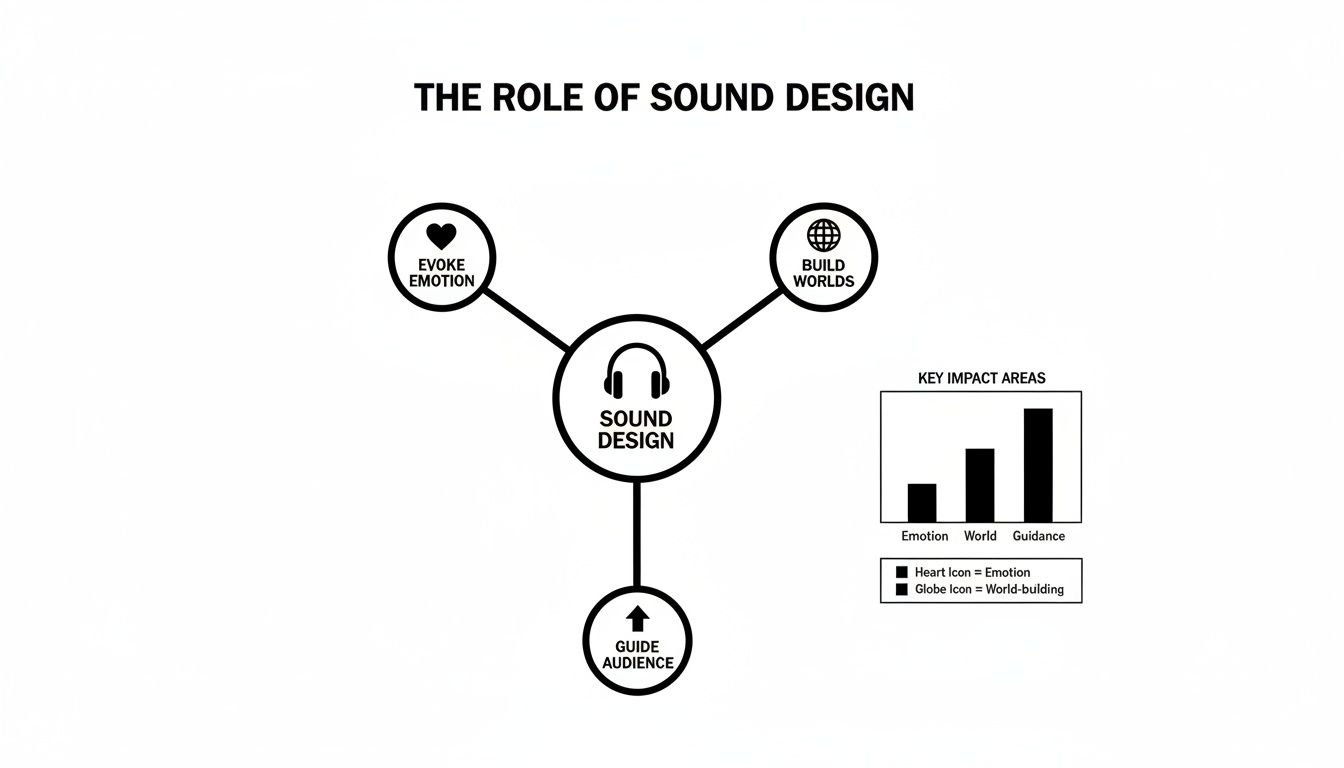
Ultimately, sound design is all about evoking emotion, building the story's world, and guiding the audience's attention. The five pillars are the tools we use to achieve that.
Let's dig into what each of these components actually is. While we'll look at them one by one, remember that in a real project, they're constantly overlapping and influencing one another. A truly great mix is one where you don't notice the individual parts—just the powerful final result.
Dialogue: This is the heart of the story. If the audience can't clearly understand what the characters are saying, the narrative simply falls apart. Dialogue isn't just about the spoken words; it's about how they're treated. This means cleaning up background noise, balancing audio levels, and making sure every single syllable comes through crystal clear.
Music: Music is the emotional engine. It tells the audience how to feel. A score can build nail-biting tension, spark a sense of wonder, or drive home a moment of heartbreak. It works hand-in-glove with the on-screen action to amplify its impact, often communicating a depth of feeling that visuals and words alone can't touch.
Ambience (or Atmosphere): These are the sounds that instantly define a location. Think of the soft chirping of crickets in a moonlit forest, the low murmur of conversation in a busy café, or the sterile, electronic hum of a hospital. Ambience is the sonic wallpaper that makes a space feel real and lived-in, grounding the audience firmly in the environment.
Foley: Named after the legendary sound effects artist Jack Foley, this is the art of performing and recording custom sounds perfectly synchronized to the picture. Foley covers all the subtle, human-centric noises that bring a character to life—the rustle of a jacket, the clink of a coffee cup, the crunch of footsteps on gravel. Without it, characters would feel like ghosts, floating silently through their world.
Sound Effects (SFX): This is the broadest and perhaps most exciting category. It includes any sound that isn't dialogue, music, Foley, or ambience. SFX can be anything from a thunderous explosion or a futuristic laser blast to the simple, satisfying click of a light switch. These sounds are the punctuation marks of the audio world, adding excitement and defining key actions in the story.
These five pillars come together to form the complete sonic tapestry. The real art isn't just in creating each sound, but in mixing them so they occupy their own distinct space in the frequency spectrum and stereo field. This prevents the final product from becoming a muddy, confusing mess.
Placing sounds properly in a three-dimensional audio space is what creates that sense of realism and direction. To get this right, sound designers use specific techniques to manipulate the audio field. For a deeper dive, you can learn more about what stereo imaging is and see how it helps create a more expansive soundscape. Nailing these fundamentals is the first real step toward building audio experiences that truly captivate an audience.
Sound design is anything but a one-size-fits-all job. The way you craft the audio for a Hollywood blockbuster is worlds apart from how you'd build the reactive, breathing soundscape of a video game. Every medium has its own unique puzzles to solve and creative doors to open, demanding a tailor-made workflow.
Getting a feel for these differences is the key to understanding how sound truly shapes the media we love. A film director needs absolute, frame-by-frame control over a fixed story. A game developer, on the other hand, needs a sound system that can instantly react to a player's every unpredictable move. This fundamental divide is what shapes a sound designer's role from one field to the next.
For film and TV, the sound design workflow is a highly structured, almost assembly-line process. You move from the big picture down to the tiniest sonic details, all mapped against a locked timeline. It's a massive team effort that starts early and ends with the final mix, where every single sound finds its perfect place.
A film's sonic journey typically follows a few key steps:
This methodical approach makes sure that every sound serves the story exactly as the director envisioned. To dig deeper into this, check out our complete guide to the audio post-production workflow.
Forget the straight line of film. Sound design for video games is all about crafting non-linear, interactive worlds. The audio has to respond in a split second to what the player does, where they go, and what's happening around them. This calls for a completely different way of thinking and a specialized set of tools.
Game audio designers don't just drag sounds onto a timeline. They build intricate systems using a special type of software known as audio middleware.
What is Audio Middleware? Imagine middleware like Wwise or FMOD as a brain connecting the game's code to all the sound files. It lets designers create rules for how sounds behave. For instance, they can make footsteps sound different on grass versus concrete, or have the music ramp up in intensity the moment an enemy spots you.
This dynamic system is absolutely vital for immersing the player in the game's world. It's no surprise that the global game sound design market is on track to hit USD 0.68 billion by 2033. Great audio isn't just window dressing; it can boost player retention by a staggering 30-50%, making it a make-or-break element for a game's success. For those curious about jumping into this field, an Access to Game Design Diploma can be a great starting point.
While the technical side can be simpler, podcasting and music production have their own unique focus: forging a clear, intimate connection with the listener.
For podcasters, the entire workflow is built around creating an effortless and engaging listening experience.
In music, sound design often merges right into the production process itself. It's about inventing unique sonic textures, crafting new synth patches, and using effects to give a song its signature vibe and emotional weight. The workflow here is incredibly creative and experimental, all about building a sonic palette that becomes the artist's unique fingerprint.
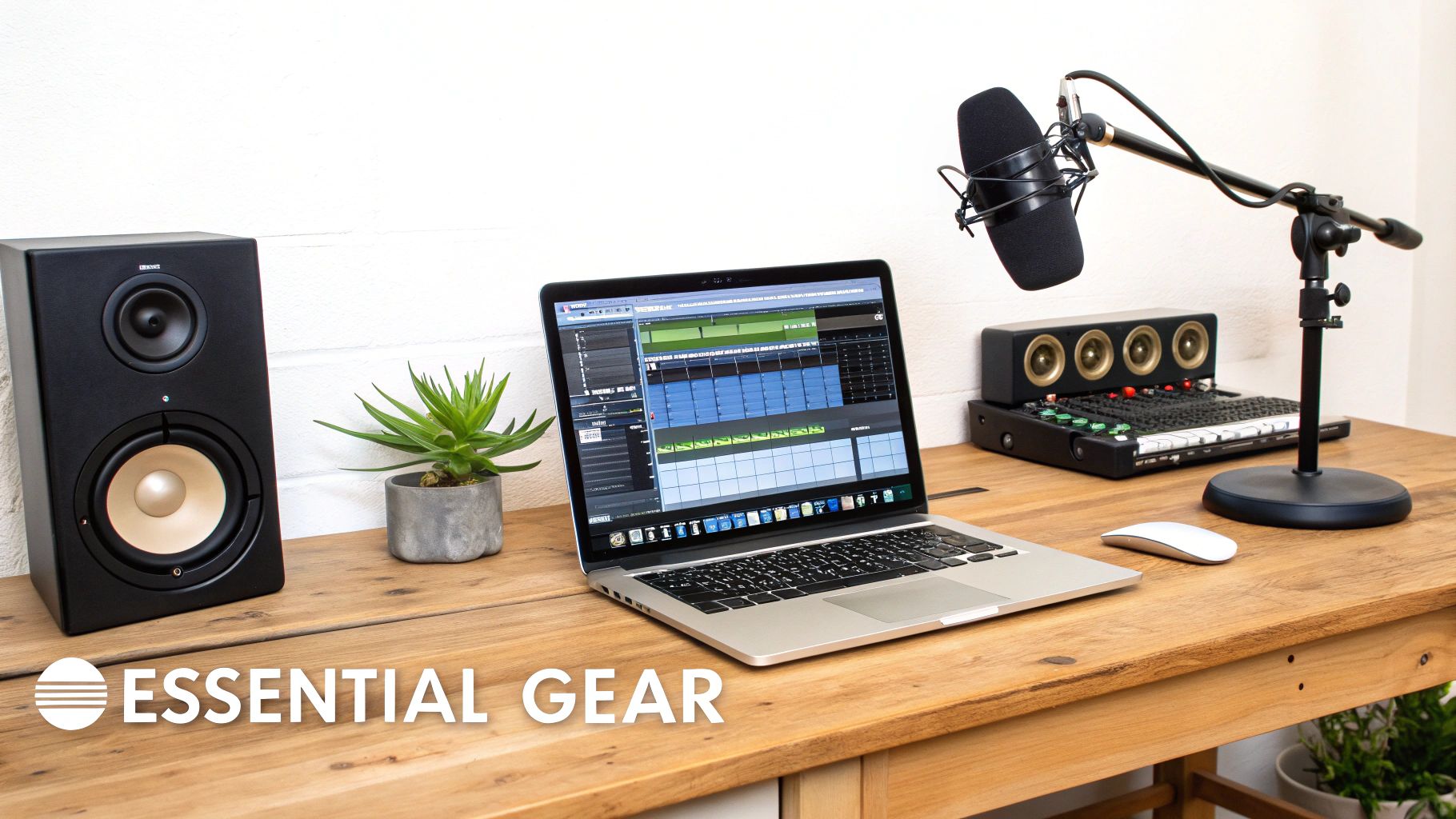
Jumping into sound design often conjures up images of massive mixing consoles and rooms packed with eye-wateringly expensive equipment. But here’s the good news: you don't need a Hollywood budget to get started. Your creativity, a good ear, and a few smart gear choices will take you much further than the price tag on your hardware ever could.
At its heart, a modern sound design setup is a powerful partnership between software and hardware. This is your command center—the place where you'll record, twist, edit, and mix every single sound. Let's break down the essentials you'll need to build your own sonic toolkit.
Your Digital Audio Workstation (DAW) is the brain of the entire operation. Think of it as your digital canvas where you paint with sound, arranging every clip and effect into a final, polished piece. There's no single "best" DAW; the right one for you comes down to your budget, computer, and what simply feels right to use.
When you're just starting out, picking a DAW can feel overwhelming. Most offer free trials, which is the perfect way to test drive them before you commit. The key is to find one you enjoy and then dive deep into mastering its workflow.
To help narrow it down, here’s a quick look at some of the most popular DAWs and what they bring to the table.
| DAW | Best For | Pricing Model | Key Feature |
|---|---|---|---|
| Avid Pro Tools | Film/TV Post-Production & Music Studios | Subscription | The long-standing industry standard for pro-level workflows. |
| Reaper | Customization & Budget-Conscious Designers | One-time Purchase (Affordable) | Incredibly flexible, lightweight, and highly customizable. |
| Apple Logic Pro | Mac Users, Music Production & All-in-One Value | One-time Purchase | Massive built-in library of sounds, plugins, and loops. |
| Ableton Live | Electronic Music & Live Performance | One-time Purchase | Unique session view is fantastic for real-time creativity. |
| Steinberg Cubase | Film Scoring & MIDI Composition | One-time Purchase | Powerful MIDI editing tools and a robust feature set. |
| PreSonus Studio One | Fast Workflows & Intuitive Design | Subscription or Purchase | Streamlined, drag-and-drop interface that's easy to learn. |
Ultimately, the software is just a tool. A brilliant sound designer can create magic in any of these DAWs, so don't get too hung up on the choice. Pick one and start creating.
While your DAW is the digital side of things, you still need physical hardware to get sound in and out of your computer reliably. Great audio depends on two things: capturing clean recordings at the source and being able to hear your work accurately.
Your first hardware purchases should cover three key pieces of gear:
Studio Monitors: Don't confuse these with regular computer or hi-fi speakers. Consumer speakers are often designed to make music sound "better" by boosting bass or treble. Studio monitors do the opposite—they provide a flat, honest frequency response. This accuracy is non-negotiable for making good mixing decisions that will sound right on any system, not just your own.
Microphones: A good, versatile microphone is your gateway to creating a unique library of sounds. Condenser mics are fantastic for capturing crisp, detailed audio in a quiet space, making them perfect for Foley or voice work. Dynamic mics are tougher and better suited for loud sources like drum hits or screaming engines.
Audio Interface: This little box is the crucial link between your analog gear (like mics) and your digital world (your computer). It converts the microphone's signal into data your DAW can use and, just as importantly, provides high-quality outputs for your monitors and headphones.
A classic beginner mistake is trying to mix on gaming headphones or cheap desktop speakers. Your mix might sound amazing in your room, but it will likely fall apart on any other system. Investing in a decent pair of studio monitors or flat-response headphones is one of the single most important steps you can take.
As you build your skills, you'll find that clean audio is everything. Learning techniques for removing background noise from audio is an essential skill for making your custom recordings sound professional from the get-go.
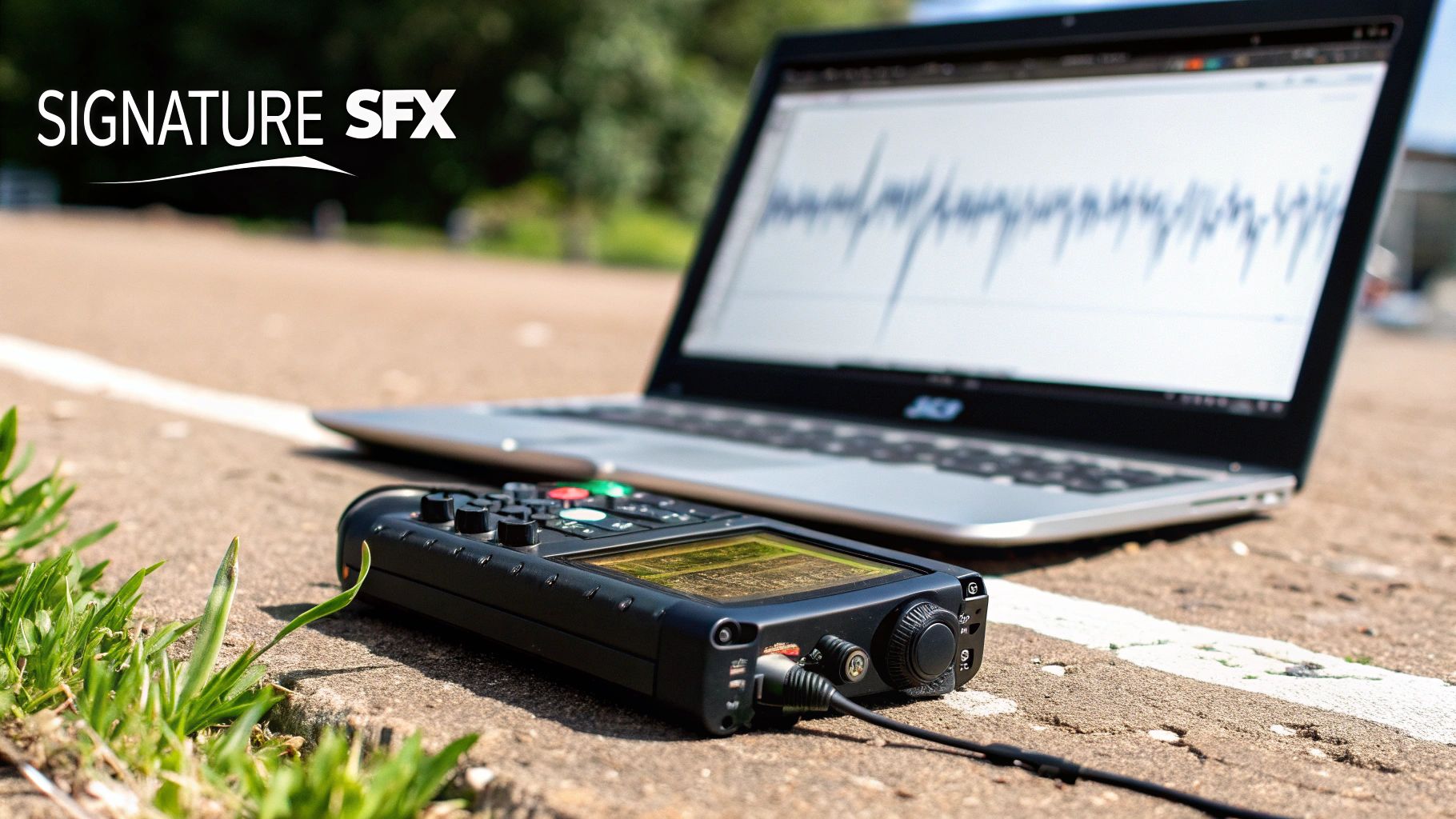
Once your core studio is set, a portable field recorder is one of the most powerful tools you can add to your arsenal. It frees you from the studio and lets you venture out to capture the authentic sounds of the world—the unique ambience of a city park, the specific creak of an old door, or the texture of footsteps on gravel.
Building your own library of original sounds is what will truly set your work apart. It gives your projects a voice and character that you just can't get from stock sound packs. This hands-on approach is what separates the good sound designers from the great ones.
While massive sound libraries are a lifesaver, the real magic happens when you start creating your own sonic signature. Building custom sound effects is what takes a project from good to truly memorable. It's the difference between using a stock photo and hanging a commissioned painting on your wall—one works, but the other tells a story.
When you move beyond pre-made assets, you unlock a new level of creative control. You get to sculpt the perfect sound for a specific moment, making sure every sonic detail serves your vision. The two main ways to do this? Go out and record the real world, or build sounds from scratch with synthesis.
Field recording is pretty much what it sounds like: capturing audio from the world around you. It’s all about listening with purpose and finding the sonic gold hidden in everyday objects and environments. This hands-on approach is how you build a library of sounds that is 100% unique to you.
The process can be as simple as taking a portable recorder on a walk. The snap of a twig, the low hum of a distant city, or the percussive clang of a construction site can all become incredible source material for your projects.
To get started, just keep a few things in mind:
Field recording is more than just collecting audio files; it’s an exercise in observation. It trains your ear to notice the sonic details most people overlook, turning the entire world into your creative playground.
This practice is fundamental for building a rich, organic sound palette that you simply can't buy in a commercial library.
If field recording is about capturing reality, synthesis is about inventing it. Using a synthesizer—whether it's a physical piece of hardware or a software plugin—you can generate and shape sounds from the ground up with oscillators, filters, and a bit of electronic wizardry.
Think of a synthesizer as a chunk of digital clay. You start with a basic waveform, like a simple sine wave, and then use different tools to mold it into something completely new. This is how so many of the iconic sci-fi and fantasy sounds we know and love are born.
Let's say we want to create a classic sci-fi laser blast with a basic synth:
This is a pretty basic example, but it perfectly illustrates the power of synthesis in sound design. By tweaking just a few parameters, you can generate anything from otherworldly creature roars to magical portal whooshes—sounds that just don't exist in the real world.
So, you've fallen in love with sound and want to make it your career. That's fantastic. But turning that passion into a paying gig doesn't just happen—it takes a solid plan, a lot of hustle, and a portfolio that does the talking for you. The journey from enthusiast to pro starts right now, not when you land your first job. You have to create the opportunities yourself.
A great way to dive in is with a rescore challenge. Seriously, this is one of the best learning exercises out there. Find a short video clip you love—maybe a scene from a film, a killer game trailer, or a slick animation—and mute it. Your job is to build its entire soundscape from the ground up with your own sound effects, Foley, and ambient tracks. You'll learn more about workflow and storytelling from this one exercise than you ever could from a book.
Let's be clear: your portfolio is everything. It’s more than just a folder of audio files; it's your calling card, your resume, and your creative fingerprint all in one. It’s what will make a potential employer or client stop scrolling and actually listen.
To build a portfolio that gets you noticed, concentrate on these things:
Think of your portfolio as your professional story. It should tell someone not just what you can do, but how you think and solve creative problems. It’s the single most important tool you have.
Once you’ve got a few solid pieces in your portfolio, it’s time to get out there. Networking can feel like a chore, but it's really about making real connections with other creative people. Hang out in online forums, share your work and ask for honest feedback, and see if there are any local industry meetups. You'd be surprised how many opportunities come from a simple conversation.
As you get more work under your belt, you might find yourself drawn to a specific area. Pay attention to that feeling. The demand for specialized skills like interactive audio for games or immersive sound for VR/AR is absolutely booming. Carving out a niche can make you the go-to person in that field.
Whether you're freelancing or looking for a full-time position, that specialized skill set and your killer portfolio are what will open doors. And don't forget the business stuff—getting a handle on things like asset licensing is vital for protecting your work and your clients. It's a challenging path, for sure, but every sound you create is a step in the right direction.
Diving into sound design can feel a bit overwhelming, and it's natural to have questions. Let's tackle some of the most common ones I hear from newcomers to help you get started on the right foot.
Absolutely not. It's a common myth, but you don't need to be a musician to be a great sound designer. While understanding music theory can give you a leg up with concepts like pitch and rhythm, it's not a prerequisite.
Sound design is really about telling a story and evoking emotion through audio. Some of the best people in the business come from backgrounds in film, engineering, or even psychology. What matters most is having a keen ear for detail, a sharp sense of observation, and getting comfortable with your audio tools. It's less about reading sheet music and more about knowing how to make a scene feel right.
This question comes up all the time. The easiest way to think about it is "what" versus "how."
A sound designer is the creative mind deciding what the world sounds like. They’re the one dreaming up a dragon's roar from scratch or layering the perfect chirps and rustles to create a believable forest.
An audio engineer is focused on how those sounds are captured, polished, and delivered. They make sure that dragon's roar is recorded cleanly, mixed to sit perfectly with the dialogue, and doesn't get buried by the musical score.
The two roles can definitely blur, especially on smaller projects where one person might wear both hats. But at their core, the designer is focused on the creative act of choosing and creating sounds, while the engineer is focused on the technical quality and balance of the final product.
Getting a handle on licensing is one of the most important things you can do to protect yourself and your work. You can't just grab any sound you find online and drop it into your commercial project.
Here's a quick rundown of the most common license types you'll encounter:
The bottom line? Always stick to trusted sound effect libraries and take a minute to actually read the license agreement before you download.
Ready to create unique sound effects without worrying about complex licensing? SFX Engine offers a free AI-powered generator that lets you craft custom, 100% royalty-free sounds for any project. Explore infinite possibilities at the SFX Engine website.